A Deepening Emergency Marked by Systematic Violence
Ethiopia’s Amhara region has deteriorated into a critical humanitarian emergency marked by systematic violence extending far beyond conventional warfare. Recent reports from multiple districts reveal a calculated campaign of terror targeting civilians, particularly women and girls, through acts of extreme sexual and gender-based violence. Documented patterns include breast amputation, genital mutilation, and systematic sexual assault designed not as random brutality but as calculated instruments of terror intended to destabilize communities and inflict lasting psychological trauma.
This violence is accompanied by ongoing drone strikes against civilian populations, shelling of residential areas, and attacks on religious institutions, creating layered suffering that compounds the humanitarian toll. The severity and deliberate nature of these acts suggest crimes that extend beyond armed conflict into the realm of war crimes and crimes against humanity, requiring urgent international investigation and accountability.
The Violence: Patterns and Documentation
Forms of Documented Atrocities
Violence in the Amhara region encompasses multiple systematic tactics:
Sexual and Gender-Based Violence: Reports describe horrifying patterns specifically targeting women’s bodies. Attacks on breasts and reproductive organs serve dual strategic purposes, symbolically attacking womanhood, motherhood, and ethnic reproduction, while functionally inflicting lasting physical, psychological, and social harm. These acts impose profound stigma, disrupt family structures, and fracture community cohesion, contributing to displacement and collective trauma.
Extrajudicial Killings and Massacres: Witness accounts document mass executions, with public buses hijacked and entire families killed. Communities describe coordinated and spontaneous attacks orchestrated by state security forces against Amhara, Gurage, and Gamo civilians.
Destruction of Infrastructure: Civilian sites including schools, churches, and health facilities have been shelled or militarized. These attacks appear designed to eliminate civilian safe spaces and destroy the social fabric holding communities together.
Drone Strikes on Civilian Gatherings: Multiple reports describe drone operations targeting civilian assemblies, weddings, religious gatherings, and market areas, suggesting deliberate targeting of non-combatants rather than military targets.
The Case of Bealem Wasse: A Life Cut Short
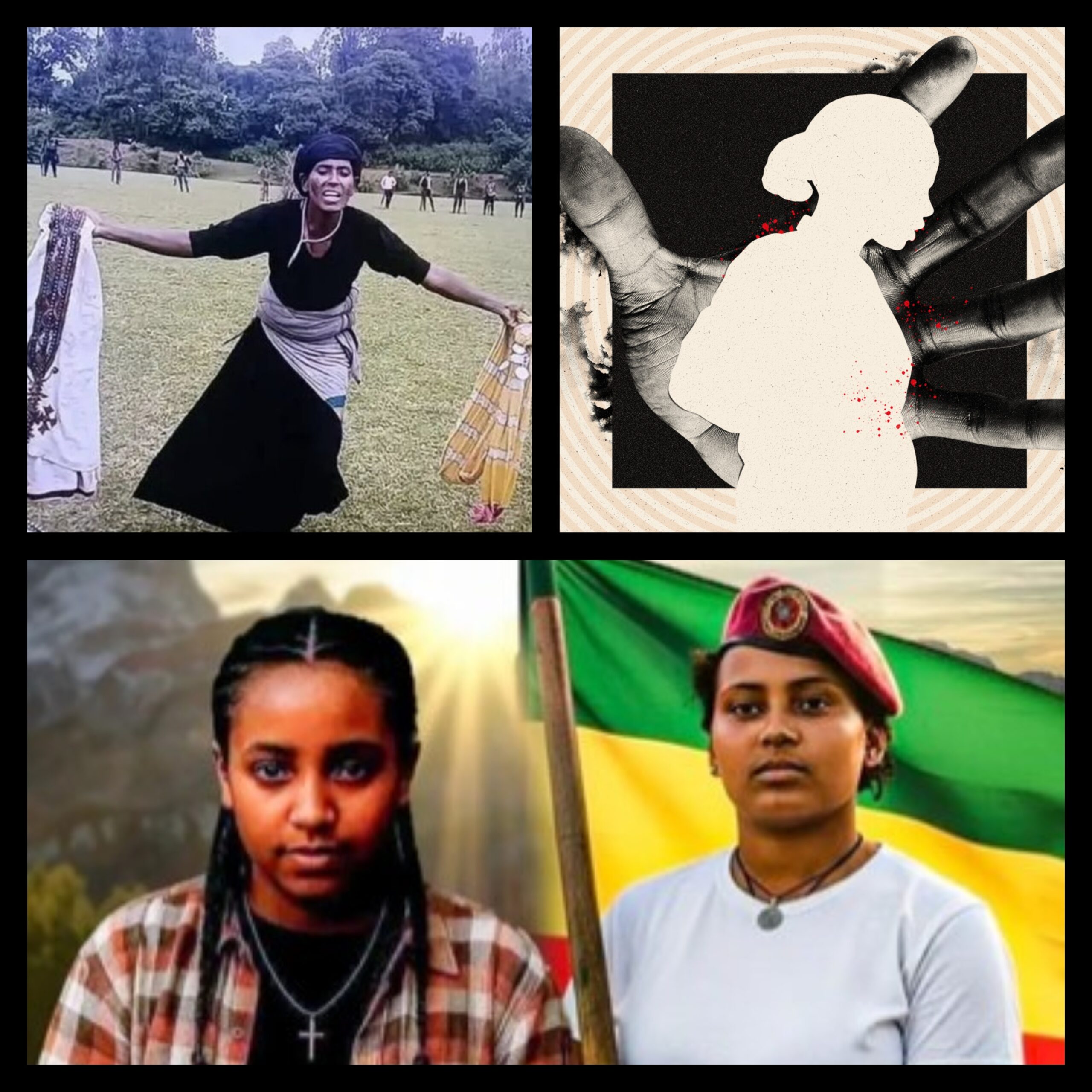
Bealem Kassye, 19, embodied the aspirations of her generation. Those who knew her described her as active, curious, courageous, and passionate about learning and dancing. She dreamed of pursuing studies in arts and sciences. However, her life became defined by the violence consuming her region.
Bealem joined the Fano resistance movement, a defense force emerging in response to systematic violence against the Amhara, because she could no longer tolerate the persecution of her people. She witnessed repeated drone strikes on civilian gatherings, burning of villages, bombardment of places of worship, and mass executions. In anguish, she questioned, “Where is God when my people suffer like this?”—a plea capturing the moral despair of Ethiopia’s youth facing relentless atrocities and state indifference.
After being wounded in combat near Mankusa Zuria, Bealem did not receive medical treatment. Instead, elements of the Oromo Special Forces severed her breast and flayed skin from her hand, revealing a tattoo reading [translate:ዓማራ ነኝ] (“I am Amhara”). Her body was then displayed publicly, a deliberate act of torture designed to attack her ethnic identity and inflict permanent collective trauma on her community. This case exemplifies the targeted nature of violence: not random brutality, but calculated attacks on ethnic identity through destruction of individual bodies.
Systematic Suppression of Evidence
Compounding the tragedy is a coordinated effort to suppress documentation of these crimes. Families of victims face detention and intimidation. Relatives are imprisoned and warned against speaking with foreign observers or media. In documented cases, parents have been coerced into publicly denying what they witnessed—a secondary violence designed to erase evidence from public record.
This pattern of silencing reflects a deliberate strategy: if atrocities cannot be documented and publicized, they cannot be investigated or prosecuted internationally. The suppression of testimony becomes another instrument of violence, denying victims the possibility of acknowledgment and justice.
Political Context: Understanding State Power Through Necropolitics
The violence cannot be understood outside its broader political context. Drawing on theoretical frameworks of biopolitics and necropolitics concepts developed by Michel Foucault and Achille Mbembe, this violence reveals how state power operates through decisions about who may live and who must die.
Biopolitics examines how modern states govern life through regulation, health management, and population control. However, necropolitics, the politics of death, reveals a darker reality: the state’s power to decide who lives and who dies, reducing certain populations to “living death” and disposability. In the Amhara context, these frameworks illuminate how political power has been exercised not through governance but through systematic exposure to death and suffering.
The Amhara population, reduced to approximately seven million over the past 34 years, exists in what Mbembe describes as “death-worlds” spaces where people are stripped of political value and rendered disposable. Ethiopia’s system of ethnic federalism has produced differentiated forms of citizenship, leaving peripheral regions in conditions of precarity where state presence is primarily militarized.
Historical Roots of Anti-Amhara Sentiment
For nearly 50 years, anti-Amhara sentiment has been prominent in Ethiopian political discourse. This sentiment was cultivated by successive regimes and amplified by ethno-nationalist movements. Under both the former Tigray People’s Liberation Front government and the current Oromo-led administration, this rhetoric has become institutionalized, shaping state policy, law enforcement practices, and resource allocation. Official government statements, restrictions on Amhara movement, mass arrests, and discriminatory law enforcement have reinforced perceptions of systematic marginalization.
Historical Patterns Re-emerging
During the 16th and 17th centuries, certain cultural warrior practices among some Oromo groups included body mutilation as proof of military valor. Emperor Menelik II gradually outlawed these practices, including slavery and other inhumane customs, transforming them into symbolic artifacts like the wooden Kelecha.
Concerning is the re-emergence of patterns reminiscent of these historical practices since the current government came to power. Reports describe extreme brutality and violence, echoing the conquest and expansion tactics of earlier centuries. The critical difference is that elements of the state apparatus, particularly Oromo-dominated divisions of the Ethiopian National Defense Forces, have not merely tolerated but reportedly participated directly in massacres targeting ethnic Amharas. Sexual violence appears deployed strategically across gender lines, suggesting a systematic strategy rather than isolated misconduct.
Religious and Cultural Heritage Under Attack
The Ethiopian Orthodox Tewahedo Church a historic institution central to Amhara cultural and spiritual identity—has become a target of politicized division. The establishment of a breakaway synod led primarily by Oromo clergy has been perceived by many as an attempt to fragment the Church along ethnic lines.
Drone strikes and artillery shelling against monasteries and churches have resulted in significant civilian casualties, including monks, priests, and worshippers. These attacks suggest a pattern of deliberate targeting of cultural and religious heritage sites, institutions that maintain community cohesion, spiritual identity, and historical memory.
The Fano Resistance: Intellectual and Moral Defense
The Fano movement, drawing inspiration from historical resistance against Italian occupation, has emerged as a defense force for Amhara communities. Despite being unpaid, under-resourced, and self-armed, Fano has conducted strategic operations prioritizing civilian safety and preservation of Ethiopian unity.
Fano represents not merely physical resistance but an intellectual and moral stance against what members describe as ethnic fascism, narrow nationalism, apartheid-like policies, internal colonialism, and pseudo-legal forms of political corruption. Instead, it upholds civic responsibility, patriotism, and a vision for Ethiopia’s common good. Fano fighters are widely regarded as embodying the Amhara spirit and defending Ethiopia throughout history.
Bealem’s legacy calls for remembrance. Future generations should be assured that sacrifices of young heroes like her are honored through commemorative events and public celebrations recognizing the courage and selflessness of Fano fighters.
Evidence and Verification Challenges
While comprehensive prevalence data remain limited due to challenges inherent in documenting abuses in active conflict zones, credible reports from survivors, witnesses, health workers, and human rights monitors corroborate systematic violence. The absence of large-scale quantitative evidence reflects not the absence of atrocities but rather the collapse of health systems, fear preventing disclosure, restricted media and humanitarian access, and government obstruction of independent investigators.
Most available information originates from survivor and witness testimonies, medical records, advocacy reports, and investigative journalism rather than peer-reviewed epidemiological studies. Due to security constraints and ongoing conflict, investigators have relied on indirect evidence including remote interviews, corroborated testimonies, and photographic or medical documentation provided by witnesses, health workers, and local human rights monitors. Despite these limitations, the convergence of multiple credible sources documents patterns of systematic violence rather than isolated incidents.
International Legal Implications
The patterns documented systematic sexual violence, torture, extrajudicial executions, destruction of cultural heritage, and targeting of civilians, which are consistent with war crimes and crimes against humanity under international law. The systematic nature of violence suggests potential genocide under international legal frameworks.
These violations constitute breaches of international humanitarian law and treaties, including the Convention on the Elimination of All Forms of Discrimination Against Women (CEDAW). They demand urgent independent investigation and accountability mechanisms to ensure perpetrators face justice and victims receive recognition and reparations.
A Call for Recognition and Justice
Despite the severity of documented crimes, international awareness and condemnation remain disproportionately limited reve,aling a persistent gap between global normative commitments to human rights and practical international engagement.
What unfolds in the Amhara region is not merely a forgotten conflict but a systematic campaign potentially constituting crimes under international law. The Amhara people’s struggle for survival and dignity demands urgent international attention, independent investigation, and meaningful accountability for documented violations of international humanitarian law.
Bealem Wasse and countless others deserve to be remembered not as footnotes in a forgotten crisis but as symbols of resistance against tyranny and injustice.
Editor’s Note
This article is based on peer-reviewed research published in December 2025 examining documented patterns of violence in Ethiopia’s Amhara region. The research, titled “Women’s Bodies as Battlefields: Breast Amputation and Genital Mutilation in the Overlooked Genocidal Conflict in Ethiopia” by Girma Berhanu of Gothenburg University, draws on verified testimonies, medical documentation, and human rights reports to document systematic atrocities including sexual violence, mutilation, and targeting of civilians. Due to ongoing security concerns and government suppression of information, comprehensive independent verification remains challenging. The allegations described represent credible accounts requiring urgent international investigation.
Readers should be aware that this article discusses disturbing content related to conflict-related sexual violence and may be distressing. The publication of this research underscores the critical importance of documenting human rights violations even in contexts where access is restricted and systematic evidence collection is impeded by active conflict and government obstruction.
Source: Berhanu, G. (2025). Women’s Bodies as Battlefields: Breast Amputation and Genital Mutilation in the Overlooked Genocidal Conflict in Ethiopia. Advances in Social Sciences Research Journal, 12(11), 227-236. DOI:10.14738/assrj.1211.19657