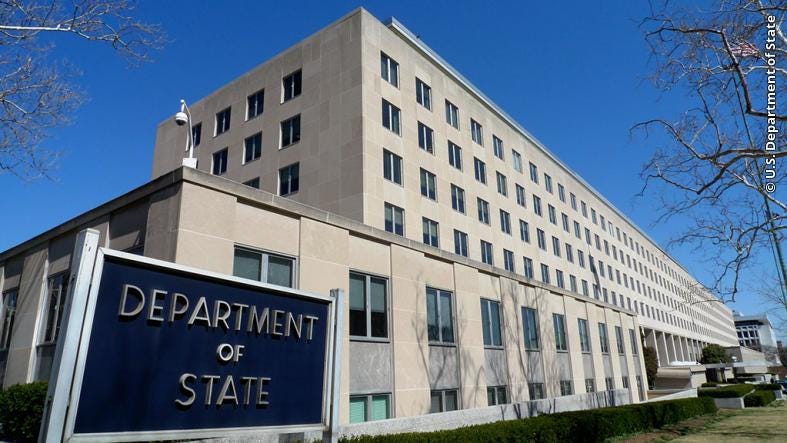
The United States Department of State has issued its highest-level travel warning for five regions of Ethiopia, urging American citizens to avoid all travel to those areas entirely. The advisory, renewed on April 1, 2026, places the Tigray, Afar, Amhara, Gambella, and Benishangul-Gumuz regions under a Level 4 “Do Not Travel” designation, the most severe classification the department issues, citing armed conflict, crime, kidnapping, and widespread civil unrest as the driving factors.
Ethiopia as a whole remains under a Level 3 “Reconsider Travel” advisory, reflecting broader concerns beyond the five flagged regions. The April update introduced new risk indicators, including exit bans and communications disruptions, underscoring the increasingly dangerous and unpredictable environment across the country.
The Tigray region, along with its border with Eritrea, continues to be cited for active armed conflict, ongoing violence, and criminal activity. Despite a peace agreement signed in late 2022, the situation there remains deeply unstable. The Afar and Amhara regions face similar dangers, with the State Department warning of high risks from political and ethnic violence in both areas. In the Amhara region in particular, fighting between armed groups and government forces has been ongoing for three years, with civilians bearing the brunt of the devastation.
The Gambella and Benishangul-Gumuz regions draw separate concern over kidnapping for ransom, in addition to crime and armed conflict. The advisory notes that terrorist groups operating in Ethiopia have specifically targeted foreigners for abduction, and that the risk of ransom kidnapping in those two regions, as well as in areas bordering Somalia, Sudan, and South Sudan, is especially high.
The State Department also flagged specific zones within the Oromia region as dangerous due to ethnically motivated violence and armed conflict, extending warnings to border areas with Kenya in the southwest as well.
Beyond physical security, the advisory highlights the threat posed by Ethiopia’s communications blackouts. Internet, cellular data, and phone services are frequently cut off before and during periods of unrest, limiting the ability of the U.S. Embassy in Addis Ababa to reach American nationals inside the country and slowing consular services. U.S. government employees based in Ethiopia are required to obtain special authorization before traveling outside the capital.
The State Department also drew attention to Ethiopia’s strict enforcement of exit bans, a risk now formally incorporated into the advisory for the first time. American citizens who accumulate unpaid immigration fines, which in some cases have exceeded $100,000, can be barred from leaving the country. Ethiopian law does not recognize dual citizenship, adding an additional layer of legal risk for Ethiopian-Americans who travel on an Ethiopian passport.
The capital, Addis Ababa, is described as relatively stable, though authorities caution that conditions elsewhere can deteriorate rapidly and without warning.
The U.S. warning comes as multiple governments have issued similar cautions in recent months. The United Kingdom has advised against all travel to the Tigray, Amhara, and Gambella regions, while Canada updated its advisory in late 2025 to warn citizens against travel to Amhara, Tigray, Benishangul-Gumuz, Gambella, and parts of the Oromia region.
Sources: U.S. Embassy in Ethiopia — Travel Advisory, April 2026 (et.usembassy.gov); Addis Standard (addisstandard.com)