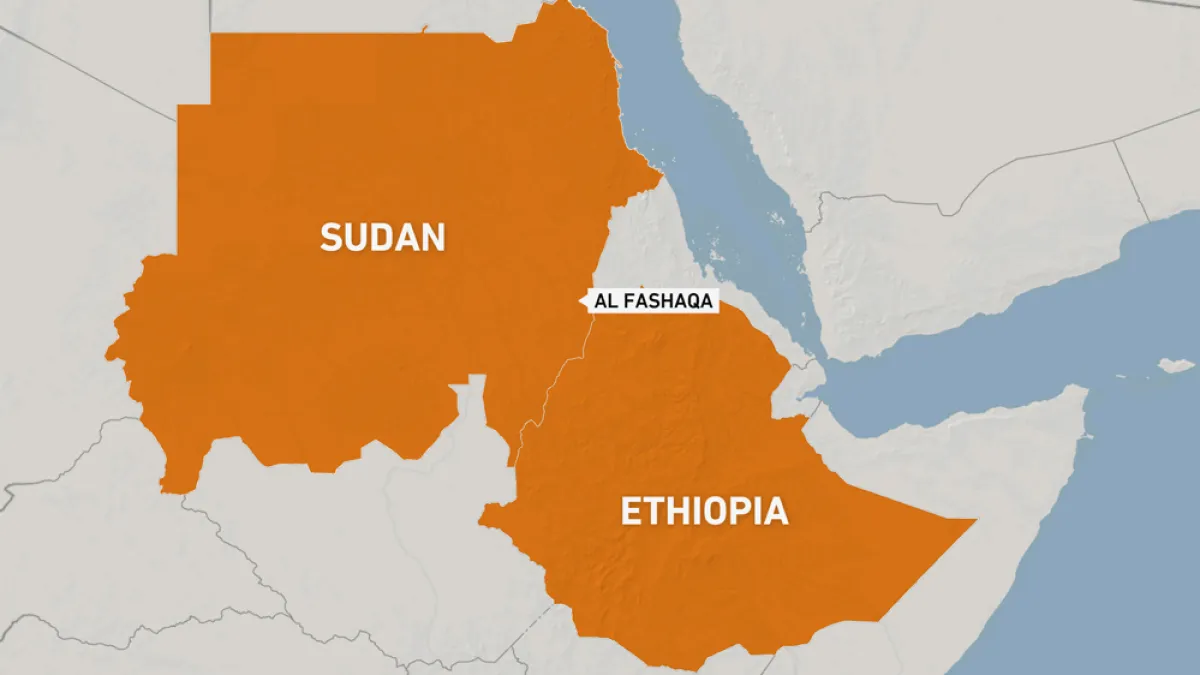
Addis Ababa/Asmara – The fragile peace between Ethiopia and Eritrea faces its gravest threat in years as disputes over maritime access and allegations of weapons trafficking push the Horn of Africa neighbors toward potential confrontation, with the strategic port of Assab emerging as the central flashpoint in an increasingly hostile relationship.
Recent accusations by Ethiopian police that they intercepted a truck carrying ammunition allegedly sent by Eritrea to arm Fano rebels in Amhara state have dramatically escalated tensions. Eritrea swiftly rejected the claims, with Information Minister Yemane Gebremeskel accusing Ethiopian Prime Minister Abiy Ahmed’s government of fabricating pretexts for military aggression.
“The regime is floating false flags to justify the war that it has been itching to unleash for two long years,” Gebremeskel said, characterizing Ethiopia’s allegations as deliberate provocations designed to justify conflict.
The weapons seizure allegations, however, represent only the latest symptom of a much deeper strategic dispute threatening to destabilize one of the world’s most volatile regions.
The Port That Divides Two Nations
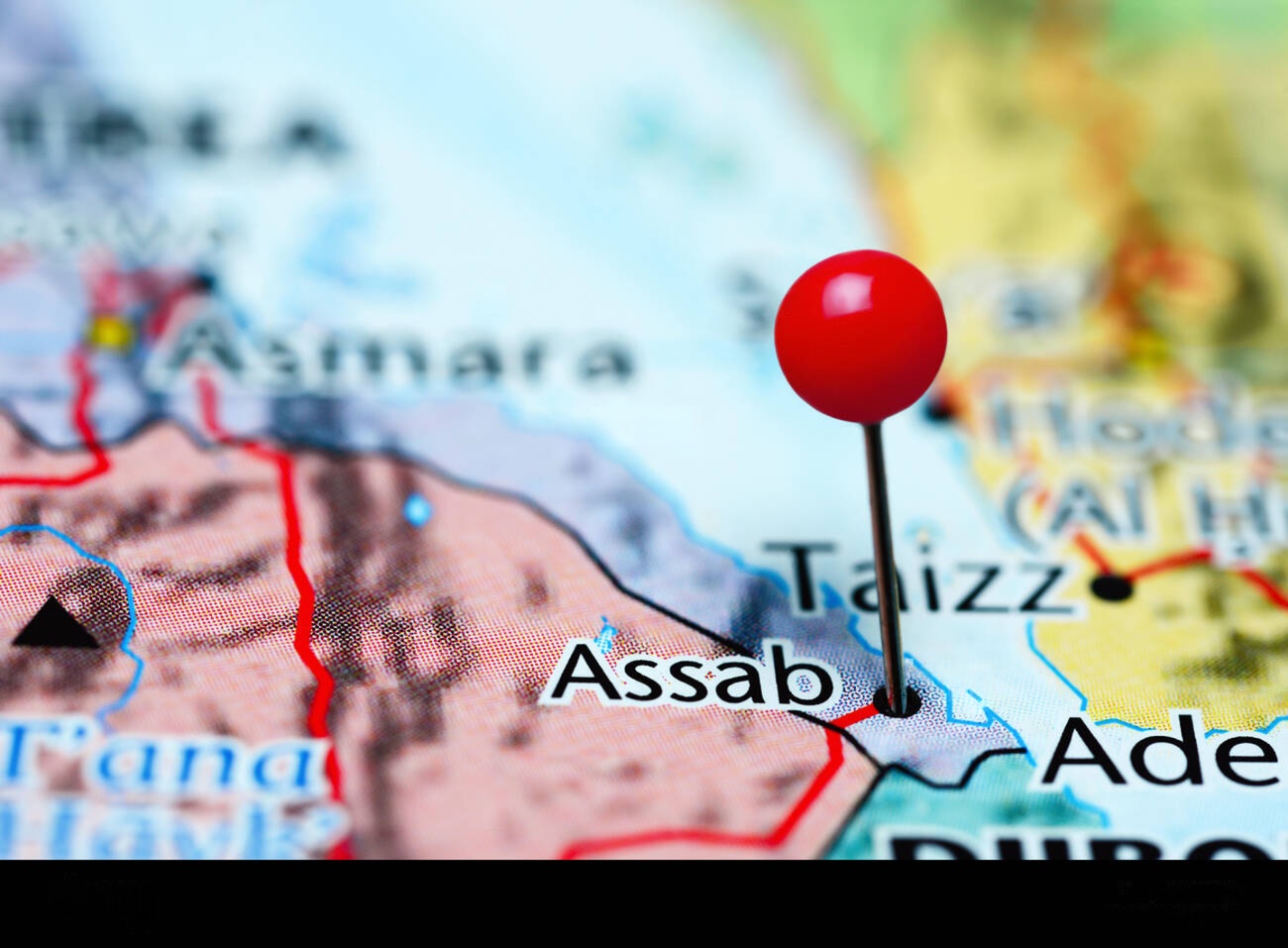
At the heart of the escalating crisis lies Port Assab, a strategic maritime facility located just 75 kilometers from the Ethiopian border that has become symbolic of irreconcilable national interests.
For Ethiopia, Africa’s second-most populous nation with over 120 million people, the lack of direct sea access represents what Prime Minister Abiy has called an existential constraint on national development and security. Eritrea’s independence in 1993 left Ethiopia completely landlocked, forcing the country to route approximately 90% of its maritime trade through neighboring Djibouti.
Ethiopian officials argue this dependency creates dangerous vulnerabilities—exposing the nation to rising transportation costs, logistical bottlenecks, and the risk of political pressure from a single transit partner. Over the past year, Abiy has increasingly framed sea access as essential to Ethiopia’s long-term economic viability and strategic autonomy.
For Eritrea, however, Assab represents far more than commercial infrastructure. The port embodies hard-won sovereignty secured through decades of armed struggle, including a brutal independence war and the 1998-2000 border conflict with Ethiopia that claimed tens of thousands of lives. Asmara views any suggestion of shared access or Ethiopian influence over Eritrean ports as a direct challenge to national independence.
Ethiopia’s Campaign for Maritime Access
Prime Minister Abiy’s government has waged an increasingly public campaign emphasizing Ethiopia’s historical and legal claims to Red Sea access. A communique from the ruling Prosperity Party described Ethiopia’s maritime aspirations as “just” and “legitimate,” claiming that “sustained pressure has been exerted to seize Ethiopia’s maritime territories and deny it access to the sea.”
Ethiopian officials insist their approach remains diplomatic and economic rather than military. In December 2025, Abiy told parliament directly: “We have no intention of going to war, rather we firmly believe the issue can be resolved peacefully.”
Nevertheless, the language emanating from Addis Ababa has functioned as what many in Eritrea perceive as a warning siren. President Isaias Afwerki told state media earlier this week that Abiy’s party had effectively declared war on Eritrea, though he added that his government sought to avoid conflict while remaining prepared to defend national sovereignty.
Strategic Importance Beyond Bilateral Relations
Port Assab’s significance extends well beyond the Ethiopia-Eritrea relationship. The facility sits near the southern entrance to the Red Sea, adjacent to one of the world’s busiest and most strategically important maritime corridors connecting Europe, the Middle East, and Asia.
During Ethiopia’s imperial and socialist periods, Assab served as a vital outlet for Ethiopian commerce. While commercial activity has been severely limited since Eritrean independence, the port’s geopolitical value has remained substantial and potentially increased given global maritime trade patterns and strategic competition in the Red Sea region.
Analysts note that Ethiopia’s renewed focus on maritime access has thrust Assab back into the center of regional strategic calculations, even without formal territorial claims being articulated publicly.
From Peace to Renewed Hostility
The current tensions represent a dramatic reversal from the optimism that followed the historic 2018 peace agreement between Abiy and Afwerki. That breakthrough, which ended two decades of military stalemate and hostility, earned Abiy the Nobel Peace Prize in 2019 and promised a new era of regional cooperation.
However, that promise has proven disappointingly short-lived. Cooperation during Ethiopia’s Tigray conflict temporarily aligned the two governments, but subsequent developments have steadily eroded trust. Eritrea’s exclusion from the peace agreement ending the Tigray war created lasting resentment in Asmara.
Today, the two governments exchange accusations of destabilizing behavior. Ethiopia alleges Eritrea supports armed groups hostile to the federal government, while Eritrea accuses Ethiopia of expansionist ambitions and undermining regional stability.
Eritrea’s withdrawal from the Intergovernmental Authority on Development (IGAD) in December 2025 reflected Asmara’s frustration with what it perceives as the regional bloc’s bias toward Ethiopian interests. Political analyst Daniel Teklai noted that when issues directly affecting Eritrean sovereignty arose, IGAD remained conspicuously “silent,” reinforcing Asmara’s sense of isolation within regional institutions.
Expert Assessments and War Risks
Despite the inflammatory rhetoric, some analysts express cautious skepticism about the immediate likelihood of armed conflict. Bayisa Wak-Woya, a former United Nations diplomat of Ethiopian origin, told Deutsche Welle that despite sharp exchanges, conditions for “an all-out war at this stage” do not currently exist.
Nevertheless, Wak-Woya acknowledged that Assab remains “deeply embedded in Ethiopia’s political imagination” and that the issue “will never disappear from the political arena,” particularly among older Ethiopians who continue to struggle with Eritrea’s independence. He emphasized that any military attempt to seize Assab would be “illegal” under international law.
International affairs expert Paul Ejime warned that the dispute reflects deeper structural tensions between contiguous nations divided by what he described as “almost artificial boundaries.” He cautioned that without sustained diplomatic engagement, the current confrontation could harden into something far more dangerous.
Regional and International Stakes
A renewed military confrontation between Ethiopia and Eritrea would carry catastrophic humanitarian consequences and potentially destabilize the entire Horn of Africa, a region only recently emerging from overlapping conflicts including Ethiopia’s devastating Tigray war.
Direct hostilities would risk disrupting critical trade routes, undermining security cooperation arrangements, and derailing fragile political transitions across multiple countries. The humanitarian impact on civilian populations already suffering from economic hardship and previous conflicts could be severe.
United Nations Secretary-General António Guterres has urged both nations to “recommit to the vision of lasting peace and the respect for sovereignty and territorial integrity” under the framework of the Algiers Agreement that originally ended their border war.
The Path Forward
Breaking the current impasse will require diplomatic creativity and meaningful international engagement. Ethiopia’s genuine strategic concerns about maritime access must be balanced against Eritrea’s legitimate sovereignty interests and deep historical wounds.
Potential solutions might involve multilateral arrangements that provide Ethiopia with reliable port access while fully respecting Eritrean territorial integrity. However, such arrangements would require trust that has been systematically eroded over recent years.
For now, the situation remains dangerously fluid. The ammunition seizure allegations, maritime access demands, and increasingly hostile public statements indicate a relationship trajectory pointed toward confrontation rather than reconciliation.
Whether cooler heads prevail or the Horn of Africa faces yet another devastating conflict may depend on leadership decisions made in Addis Ababa and Asmara in the coming weeks and months. The international community watches nervously, aware that the stakes extend far beyond two nations to encompass regional stability and global maritime security.
Source: This article is based on information gathered from Deutsche Welle (DW) and news reports published on January 15, 2026.