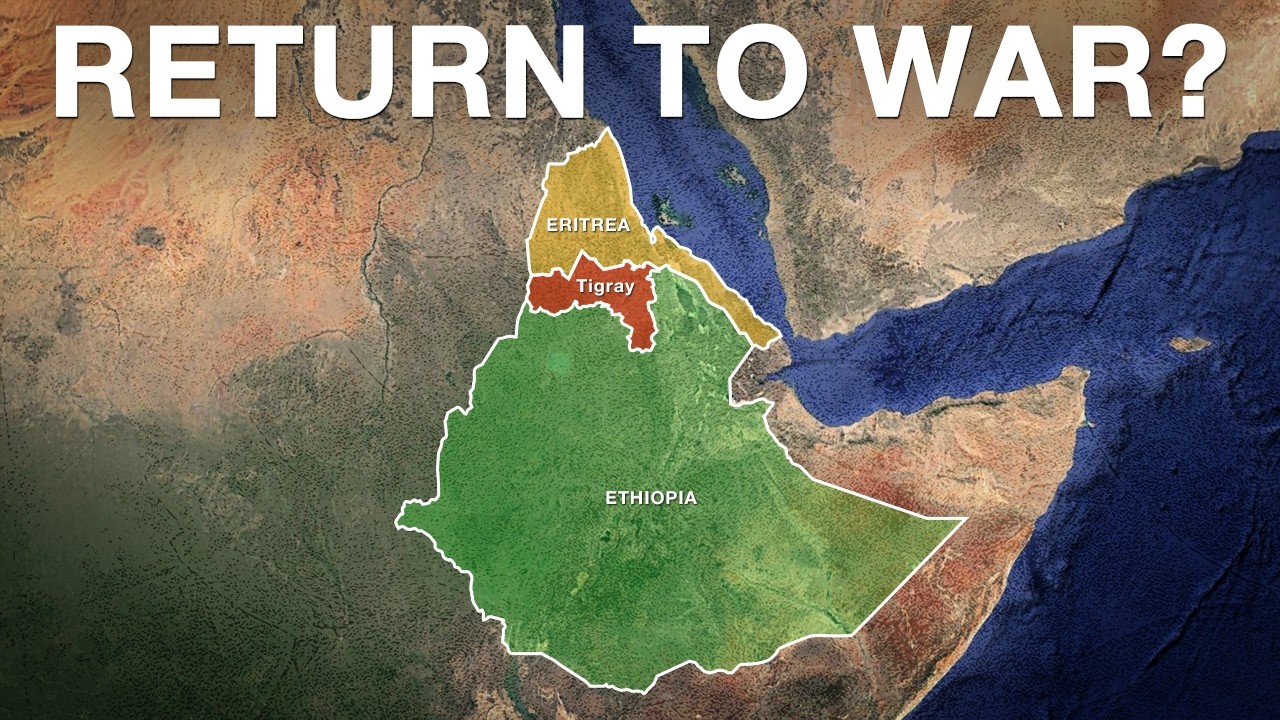
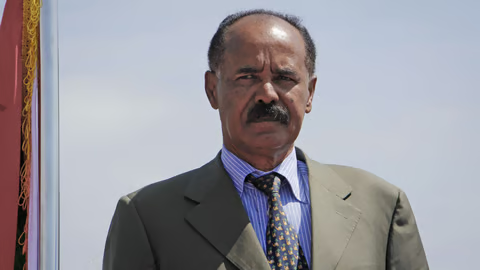
Eritrean President Isaias Afwerki has accused Ethiopia of declaring war on Eritrea while rejecting characterizations that frame escalating tensions between the two nations as centered on Red Sea access, according to remarks broadcast on Eritrean state television Monday.
The accusations mark the latest development in deteriorating relations between the two Horn of Africa neighbors, following months of mutual recriminations and growing regional instability.
Rejecting the Red Sea Narrative
During the televised address, President Isaias dismissed suggestions that the current friction stems from disputes over Red Sea access, stating explicitly that such ambitions are not Eritrea’s priority.
The Eritrean leader instead pointed to what he described as Ethiopia’s broader militarized agenda under the ruling Prosperity Party, claiming armed conflicts have continued across multiple Ethiopian regions despite the November 2022 Pretoria peace agreement that ended the two-year Tigray war.
President Isaias listed ongoing conflicts in Ethiopia’s Amhara, Tigray, Afar, Oromia regions, and tensions with Somalia, questioning the origins of military funding and equipment he alleges Ethiopia is acquiring. He characterized those driving the escalation in harsh terms and stated Eritrea would not seek external support if conflict erupts.
Regional Conflicts and Foreign Interference
The Eritrean president’s comments extended beyond Ethiopia to address the crisis in Sudan, where he rejected descriptions of the conflict as a civil war or internal power struggle. Instead, he accused foreign powers, particularly the United Arab Emirates, of driving instability in Sudan.
Drawing parallels with South Sudan’s 2011 secession, President Isaias warned against repeating what he termed historical mistakes and called for the Sudanese army to be given the opportunity to lead the country’s transition.
According to reporting by Addis Standard, this is not the first time President Isaias has pointed to foreign interference as a destabilizing force in the Horn of Africa. In an interview with Egyptian media in November 2025, he argued that conflicts across the region have become complicated by the intervention of various external forces and governments.
Ethiopia’s Position on Sea Access
Prime Minister Abiy Ahmed addressed Ethiopia’s quest for Red Sea access during an October 2025 session with the House of People’s Representatives, describing it as a matter of legal, historical, and existential importance that requires peaceful dialogue.
According to Addis Standard’s reporting, the Prime Minister stated there is no official documentation explaining how Ethiopia lost sea access, calling it a question of national survival rather than a provocative demand.
Regional Implications
President Isaias called for enhanced roles for regional actors including Egypt and Saudi Arabia in addressing Horn of Africa security concerns, while rejecting what he characterized as security arrangements dominated by outside powers.
The Eritrean leader described Eritrea’s engagement with Saudi Arabia as aimed at promoting regional stability through consultation and building common understanding, emphasizing that regional security should be ensured by regional coalitions rather than external forces.
The escalating rhetoric between Eritrea and Ethiopia comes amid broader instability across the Horn of Africa, with ongoing conflicts in Sudan, Somalia, and within Ethiopia itself raising concerns about regional security and humanitarian consequences.
Source: This article is based on reporting by Addis Standard, dated January 13, 2026.