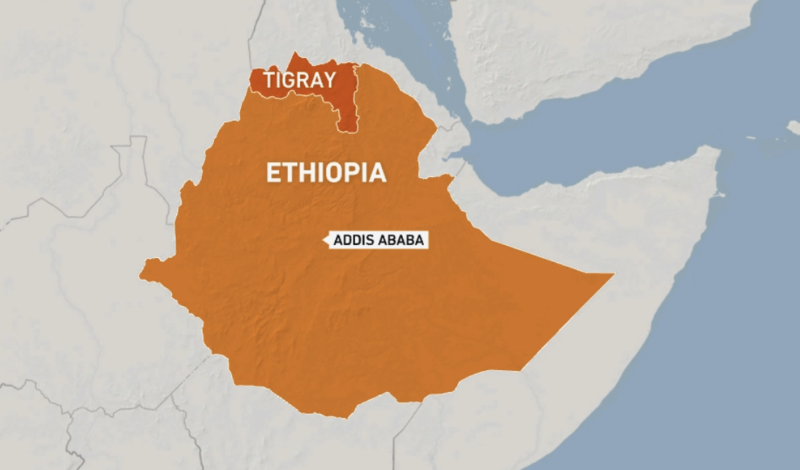
Ethiopia’s opposition Ethiopian People’s Revolutionary Party (EPRP) has accused the federal government of steering the northern Tigray region toward a new conflict, warning against what it calls efforts to justify renewed military action under the pretense of “law enforcement and peacekeeping.”
In a statement released on July 21, the party said the push to draw Tigray back into war under the cover of peacekeeping “must stop,” arguing that the Pretoria Cessation of Hostilities Agreement (CoHA) was intended to bring a lasting end to the war and resolve outstanding disputes through political dialogue rather than force.
Accord’s Core Purpose “Being Undermined,” Party Says
While acknowledging criticisms raised by various parties regarding the inclusivity and shortcomings of the Pretoria Agreement, EPRP maintained that its central purpose was to permanently end hostilities, prioritize political solutions, facilitate the return of displaced people, ensure humanitarian aid delivery, and see through commitments made by all signatories. The party accused the federal government of working to push the region back into conflict, in violation of its own prior commitments.
Context: Addis Ababa Rally Sparks Backlash
The EPRP’s statement follows a demonstration held at Meskel Square in Addis Ababa on July 18, under the banner “Stop the Abductions; Let Peace Prevail.” The rally was organized by the Tigray Peace and Change Council, a group formed by former senior Tigray regional officials, including Getachew Reda and Lt. Gen. Tsadkan Gebretensae.
Notably, the event was one of the few protest gatherings in recent years to receive formal authorization from city and security authorities. It drew Tigrayans living in Addis Ababa and nearby areas, with demonstrators calling for full implementation of the Pretoria Agreement while raising concerns over alleged forced recruitment, arbitrary detentions, displacement of young people, and civilian abuses in Tigray.
Speaking at the rally, Getachew Reda, who leads the Simret Party and formerly headed the Tigray Interim Administration, accused what he referred to as an “illegal TPLF group” of blocking development in Tigray and forcibly recruiting young people, including claims that some were sent to fight in Sudan.
The demonstration took place amid growing controversy surrounding a regional proclamation that would introduce mandatory military conscription and penalties for media organizations deemed to be undermining the process.
TPLF Pushes Back, Calls Rally Politically Motivated
The Tigray People’s Liberation Front (TPLF) and the Tigray Communication Affairs Bureau strongly criticized the rally, characterizing it as a politically engineered event orchestrated by the federal government. TPLF spokesperson Michael Asgedom denied allegations of forced conscription and argued that the demonstration was designed to build political justification for a renewed federal military campaign against Tigray.
Separately, Human Rights Watch has also raised concerns, accusing Tigrayan authorities of abducting and forcibly recruiting civilians, including children as young as 15, into military service. The TPLF has denied engaging in forced conscription. However, in a statement over the weekend, the group’s leader called on the people of Tigray to “restore their honour” by preparing to defend the region’s sovereignty, stating that peace alone would not guarantee it.
EPRP Draws Comparison to Pre-2020 War Rhetoric
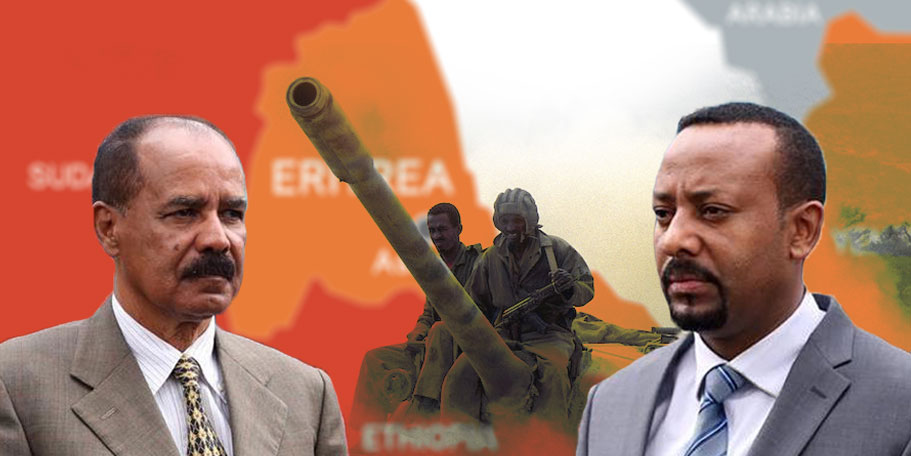
The EPRP argued that the current political climate closely mirrors the conditions that preceded Ethiopia’s 2020 war with Tigray, describing the ongoing media campaign as a deliberate effort to psychologically prepare the public for renewed conflict. The party alleged that the government’s true objective is to launch another military campaign against Tigray rather than pursue peace.
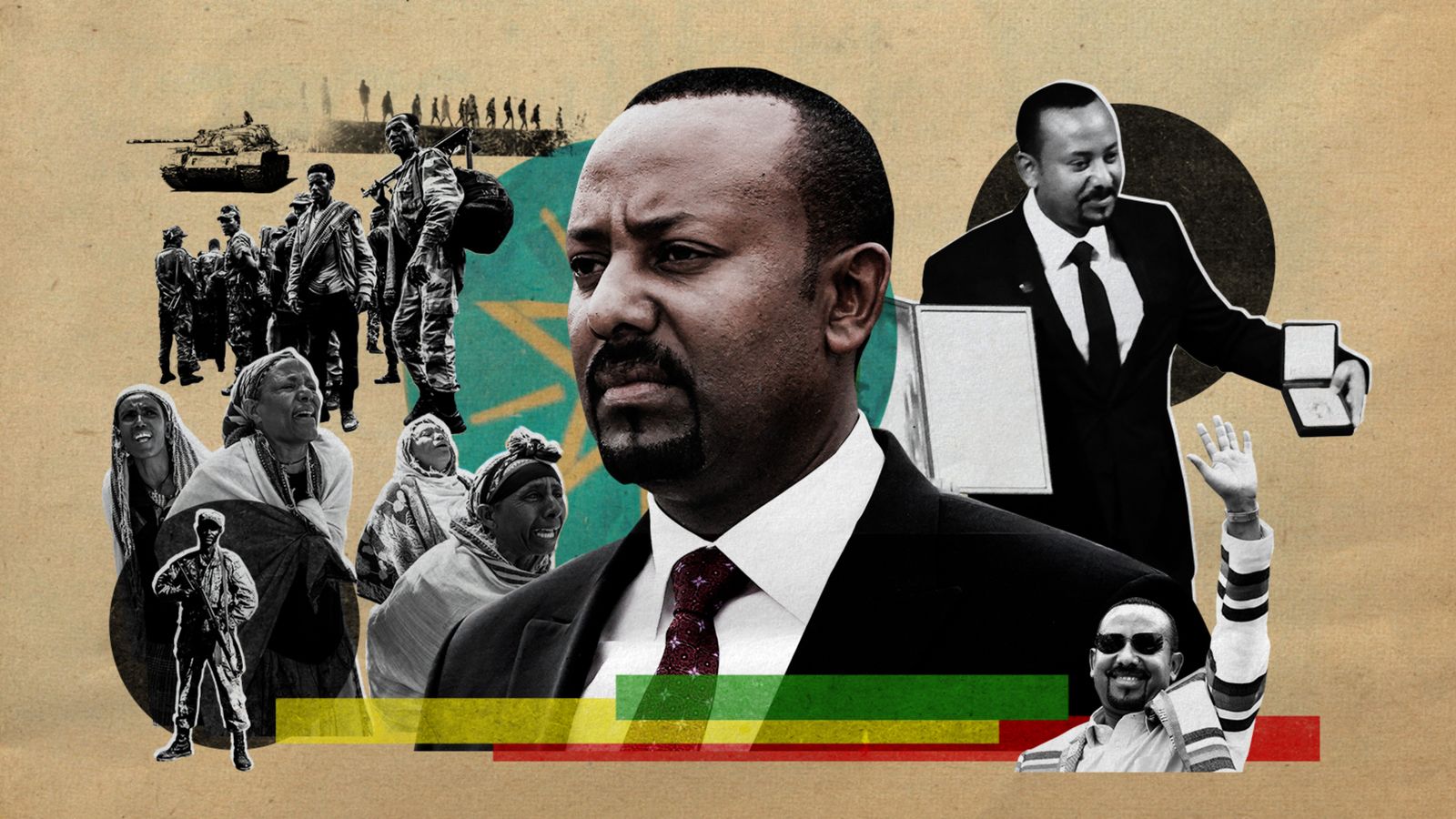
The 2020–2022 war, launched with the stated aim of confronting the TPLF, resulted in the deaths of hundreds of thousands of people, the displacement of millions, widespread sexual violence against women, and documented war crimes, contributing to a severe humanitarian crisis in the region. The EPRP noted that calls for independent investigations and accountability over these events have yet to be acted upon.
Continued Economic Restrictions Cited
The party further criticized what it described as ongoing economic restrictions imposed on Tigray even after the signing of the Pretoria Agreement, pointing to continued constraints on civil servant salaries, fuel access, transportation, budget allocations, and essential public services.
EPRP also accused certain opposition groups and individuals from Tigray of providing political cover for what it called preparations for renewed conflict, while urging Tigrayans to remain united and avoid being drawn into political, religious, or socio-economic divisions and intercommunal conflict.
The party called on Ethiopians more broadly to strengthen relationships across communities and resist division, while urging the international community and diplomatic missions to look beyond political posturing and support genuine peace efforts.
“Ethiopia cannot bear any further bloodshed,” the party said in its closing statement.
Sources: Africanews and Addis Standard