Ethiopian authorities released more than 600 federal prisoners on September 10, 2026, including several prominent opposition politicians, after the government dropped pending charges and granted conditional pardons following months of advocacy by the Ethiopian Human Rights Commission (EHRC).
A Five-Month Process Behind the Releases
According to the EHRC, the releases followed roughly five months of engagement between the commission, government institutions and other stakeholders, after citizens and families petitioned for special consideration of cases involving people convicted of, or on trial for, a range of offenses, including allegations of attempting to overthrow the constitutional order and terrorism-related charges. The commission said it brought the matter to the federal government, and Prime Minister Abiy Ahmed responded by directing relevant institutions to take steps consistent with peace, reconciliation and the rule of law.
Under the arrangement, individuals already convicted received formal pardons, while those with pending court cases had their charges conditionally dropped. The EHRC said the legal and civil rights of released individuals that had been suspended during their proceedings were being restored.
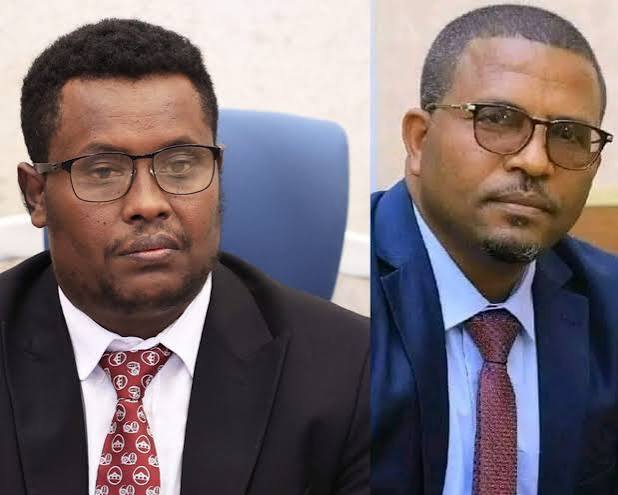
Among the higher-profile figures released are federal MP Christian Tadele of the National Movement of Amhara (NaMA), Dr. Chane Kebede, former chairman of the Ethiopian Citizens for Social Justice (EZEMA) party, and Dr. Kassa Teshager, a member of the Addis Ababa City Council. EHRC Chief Commissioner Berhanu Adelo described the releases at a press briefing as a concrete step forward for the country’s ongoing National Dialogue process, moving it from statements of intent toward practical action. He called on regional governments, civil society and local communities to support the reintegration of former detainees, while also urging armed groups still engaged in conflict to pursue peaceful political engagement instead, and cautioning political actors against using the releases for partisan advantage.
Some outlets linked the timing directly to the Ethiopian New Year, reporting that the Prime Minister framed the move as an early, tangible outcome of recommendations from the National Dialogue, which had called for the release of citizens imprisoned over what he characterized as past political mistakes.
Not everyone eligible was freed. The EHRC confirmed that 28 individuals connected to the same case files declined to submit formal pardon applications and therefore remained in custody, with their cases continuing through ordinary judicial channels.
A Separate, More Contested Account From Amhara
A different picture has emerged in reporting focused specifically on the Amhara region. According to this account, 300 political prisoners detained in connection with the Amhara conflict were released around the same time, but only after completing government-run “rehabilitation training” covering state security coordination, conflict resolution and peace initiatives, and after signing formal pardon pledges. Those pledges reportedly required detainees to acknowledge responsibility for harm caused during the conflict, renounce armed groups including Fano, and commit to supporting state security.
That same reporting says the process split detainees into two groups: those who accepted the training and signed the pledge, and roughly 30 others, including opposition politicians, journalists and academics, who refused and remain in detention, with their cases proceeding through the courts rather than through pardon.
The discrepancy between this account and the EHRC’s own description (five months of case review and legal pardons, with 28 non-signers still held) suggests either overlapping but distinct release tracks, or differing characterizations of the same process by different outlets.
Concerns Over Coerced Confessions
Reporting on the Amhara-specific releases has raised due-process concerns that go beyond the EHRC’s official framing. According to Borkena, detainees were not simply pardoned, they were required to sign formal pledges acknowledging responsibility for harm caused during the conflict and renouncing armed groups, including Fano, before being freed. Critics argue that conditioning release on signing a statement of guilt amounts to coerced confession rather than genuine pardon, particularly since those who declined to sign, including opposition politicians, journalists and academics, remained in detention rather than being released unconditionally.
Rights advocates have pointed to this pattern as evidence of a broader problem: that under Prime Minister Abiy Ahmed’s government, “reconciliation” is being used as leverage to extract admissions of guilt, with continued imprisonment as the penalty for refusal. Some critics describe this dynamic as authoritarian, arguing that freedom is being made conditional on renouncing dissent rather than on due process.
The government and the EHRC have not addressed this characterization directly. Official statements describe the releases as voluntary pardon applications processed through legal channels, framed as a goodwill gesture tied to the National Dialogue and national reconciliation, not as a mechanism for extracting confessions. The gap between these two accounts remains unresolved in public reporting.
Wider Political Context
The releases come as Ethiopia’s National Dialogue process continues, and amid reports that the Tigray People’s Liberation Front, Fano factions in Amhara and the Oromo Liberation Army have been coordinating more closely, with TPLF leadership describing their cooperation as having reached an advanced stage. Analysts have also noted the timing coincides with Ethiopia’s efforts to improve its international human rights standing.
Sources: The Reporter Ethiopia (thereporterethiopia.com); Borkena (borkena.com); Wazema Radio; Fana Media Corporation (fanamc.com); Fidel Post; Ethio Negari; FSX Business; Africa Press English.