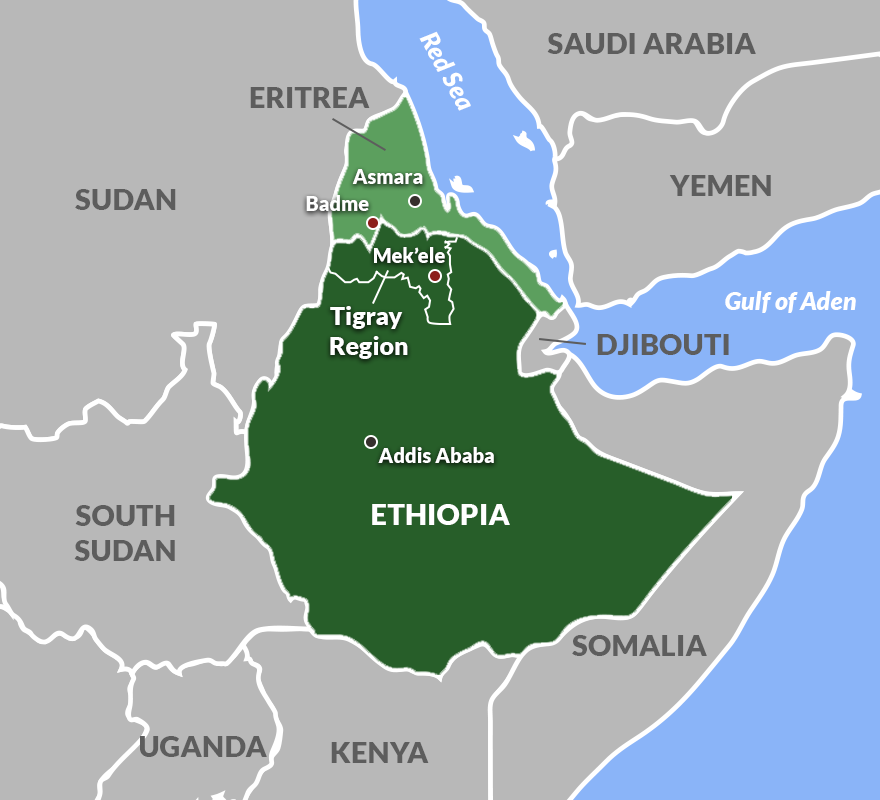
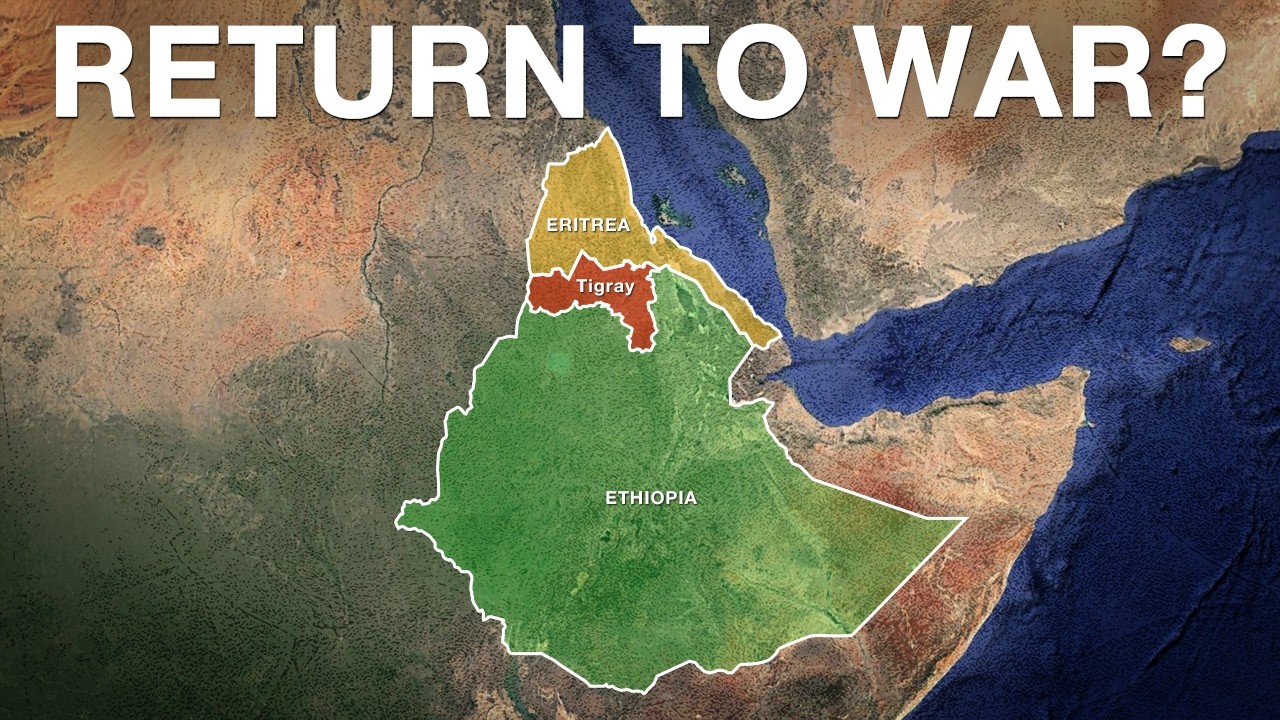
The Horn of Africa is once again bracing for the possibility of large-scale conflict, as diplomatic relations between Ethiopia and Eritrea continue to deteriorate at an alarming pace, raising fears that the fragile peace that followed the devastating 2020–2022 Tigray War may be unraveling entirely.
Ethiopia’s Foreign Minister Gedion Timothewos formally accused Eritrea in early February of military aggression, stating that Eritrean troops had crossed into Ethiopian territory in the towns of Sheraro and Gulomakada and demanding their immediate withdrawal. Eritrea, for its part, has flatly denied any incursion, with its Information Minister Yemane Gebremeskel dismissing the accusations as a pretext for war against Asmara.
The roots of the current standoff stretch back to November 2022, when the Pretoria Agreement brought an end to a civil war that claimed an estimated 600,000 lives and displaced millions across northern Ethiopia. Crucially, Eritrea was not included in those peace negotiations, a decision that many analysts say planted the seeds of the present crisis. Eritrean forces, which had fought alongside Ethiopian federal troops against the Tigray People’s Liberation Front (TPLF), never fully withdrew from northern Tigray following the ceasefire, and relations between Addis Ababa and Asmara have been in a downward spiral ever since.
Compounding the diplomatic fallout is a deepening power struggle within Tigray itself. The TPLF, the region’s dominant political force, has fractured into rival factions. One, led by TPLF chairman Debretsion Gebremichael, has reportedly been drawing closer to Eritrea. The other, aligned with former interim administration president Getachew Reda, has been more closely tied to the Ethiopian federal government. This internal division has fueled violent clashes, with TPLF-aligned forces seizing control of major cities including the regional capital Mekelle and the northern city of Adigrat.
Civilians across Tigray are now fleeing in large numbers. Residents describe a region gripped by fear, with young people seeking visas and escape routes, and internally displaced communities living in makeshift camps on the outskirts of cities. The UN Secretary-General’s office has warned of a serious risk of a return to wider conflict.
Adding a geopolitical dimension to the crisis is Ethiopia’s long-stated ambition to regain access to the Red Sea, a goal lost when Eritrea gained independence in 1993. Prime Minister Abiy Ahmed has called sea access an “existential” necessity for landlocked Ethiopia, a position that Eritrea interprets as a direct threat to its sovereignty over key ports, including Assab. Meanwhile, Eritrea has reportedly strengthened ties with Egypt, another country at odds with Ethiopia over the Grand Ethiopian Renaissance Dam and Nile water rights.
Military movements on both sides have raised alarm. Reports from early 2025 indicated Eritrea issued nationwide military mobilization directives, while Ethiopia deployed additional federal forces toward the northern border. Though neither side has officially declared war, seasoned regional observers warn that the situation is as volatile as it has been in years.
The international community has been slow to respond. With no active U.S. special envoy for the Horn of Africa and limited coordinated action from the African Union or the European Union, the diplomatic window to prevent escalation is narrowing.
What happens next in Tigray could determine not just the fate of millions in northern Ethiopia, but the stability of an entire region, one already strained by Sudan’s civil war, Gulf power rivalries over Red Sea influence, and decades of unresolved border disputes.
Source: Associated Press (AP News). Additional context sourced from Al Jazeera, Foreign Policy, The Soufan Center, and the Council on Foreign Relations Global Conflict Tracker.