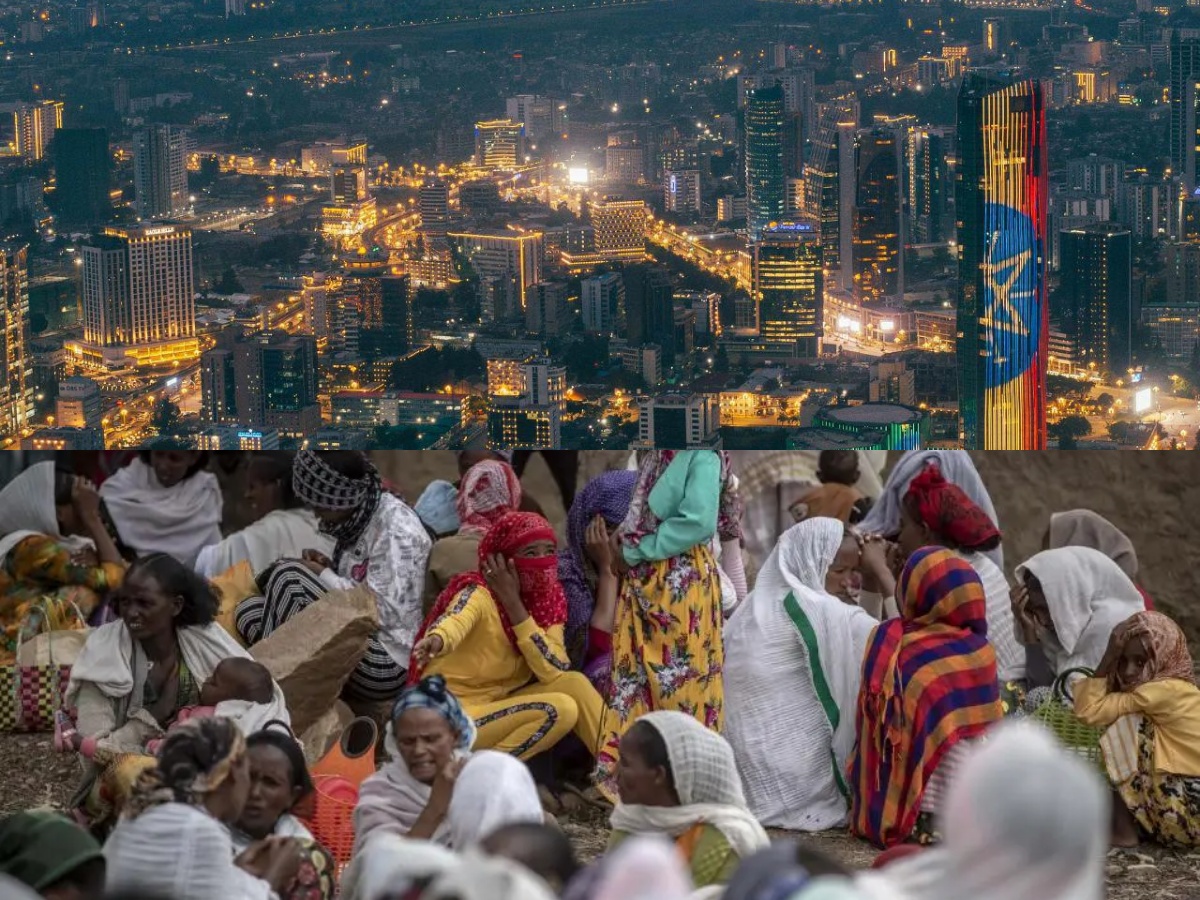
As Ethiopia’s government pushes forward with ambitious infrastructure and urban development projects including a reportedly multi-billion-dollar presidential palace, a staggering number of its citizens continue to depend on emergency food aid to survive, raising urgent questions about who the country’s much-touted “prosperity” actually serves.
The contrast is stark. While Addis Ababa’s skyline is being reshaped by gleaming corridors, new parks, and modernized boulevards, showcased by the ruling Prosperity Party as proof of national progress, data from the World Bank paints a troubling picture. Ethiopia’s poverty rate, measured at $3 per day, climbed from 33% in 2016 to 39% in 2021 and is projected to reach 43% by 2025, reversing two decades of economic progress made before the country’s recent crises.
The United Nations and international humanitarian organizations have repeatedly flagged that more than 15 million Ethiopians face acute food insecurity, with malnutrition exceeding emergency thresholds in several regions. Ongoing conflict in Amhara, Oromia, and other areas has displaced millions more, severely limiting humanitarian access and compounding the crisis.
Critics argue that the government’s flagship development projects, including the controversial Corridor Development initiative in Addis Ababa, have resulted in mass evictions of low-income residents and small businesses, often without adequate notice or compensation. Rather than serving the urban poor, these projects appear designed for foreign visitors and a small economic elite, creating a cosmetic image of progress that masks deeper systemic failures.
Economic analysts familiar with Ethiopia’s fiscal structure note that public resources, contracts, and investment opportunities are increasingly concentrated within networks connected to the ruling elite. Under this model, prosperity functions as patronage while poverty becomes a tool of political control, rather than a challenge to be solved.
Ethiopia’s external debt situation adds further complexity. The country is currently restructuring $12.4 billion in external debt under the G20’s Common Framework, having defaulted on a $1 billion Eurobond in December 2023. Critics point out the contradiction of pouring vast public resources into prestige infrastructure projects while simultaneously seeking debt relief from international creditors.
The humanitarian toll of ongoing conflicts remains enormous. The Tigray war alone claimed an estimated 600,000 lives before a ceasefire in November 2022, and instability in multiple regions continues to obstruct aid delivery and displace communities.
International observers, aid organizations, and independent media outlets have called on the Ethiopian government to prioritize transparent governance, equitable resource distribution, and genuine accountability over high-profile symbolic projects. As elections approach in June 2026, many Ethiopians are asking whether the vision of prosperity being projected to the world reflects the reality they live every day.
Source: This article draws on commentary published by Addis Standard titled “Lights for Few, Darkness for Many: Ethiopia’s Mirage of Prosperity” (April 9, 2026), available at addisstandard.com. Supporting data sourced from the World Bank, IRC, and UN humanitarian reports.