Relations between Sudan and Ethiopia have deteriorated sharply in recent days, with analysts and regional observers warning that the two neighboring countries may be closer to open warfare than at any point in decades.
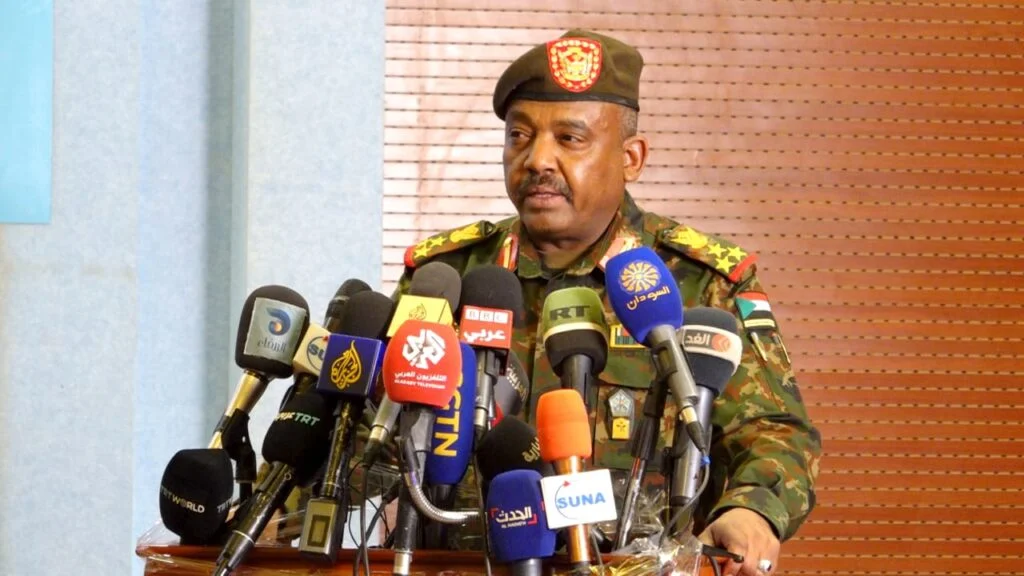
The immediate trigger came on May 4, when drones struck Khartoum’s international airport and military installations in the Greater Khartoum region. Sudan’s military spokesperson, Brigadier General Asim Abdelwahab, stated that the government possesses evidence showing drones supplied by the UAE took off from Bahir Dar Airport in Ethiopia’s Amhara region across four separate attacks since March 1, calling the actions “direct aggression against Sudan” by both Ethiopia and the UAE. Both Addis Ababa and Abu Dhabi have denied any involvement.
Sudan Moves Troops to the Border
In direct response to the alleged attacks, the Sudanese army began reinforcing its military presence in the localities of East Gallabat, Basunda, and the Al-Fashaga regions of Gedaref State along the Ethiopian border, with military sources confirming the buildup mid-week. Witnesses along the border also reported that the deployment is strengthening anti-aircraft defenses near Blue Nile State. The deployment is aimed at raising security readiness and preparing for potential developments along the frontier.
Sudan’s Foreign Minister Mohieddin Salem issued a stark warning, declaring the country’s readiness to “enter into an open confrontation” with Ethiopia “if it becomes necessary.”
A Long-Running Dispute
The current crisis did not emerge overnight. The relationship between Addis Ababa and Khartoum had already been strained over the Grand Ethiopian Renaissance Dam (GERD) and the long-running border conflict over the Al-Fashaga agricultural territory. Sudan and Ethiopia clashed over Al-Fashaga as far back as 2020, when Sudanese forces moved to reclaim vast tracts of farmland that Ethiopia had controlled for decades.
Khartoum has also leveled broader accusations against Addis Ababa. Sudanese authorities have accused Ethiopia of backing the paramilitary Rapid Support Forces (RSF) and training its fighters inside Ethiopian territory. Reuters confirmed in early February 2026 that Ethiopia had built a camp in the Benishangul-Gumuz region to train RSF fighters, estimating over 4,000 RSF soldiers were at the facility as of early January. Ethiopia has not publicly confirmed these reports.
A Wider Regional Web
Analysts warn the Sudan-Ethiopia standoff is entangled in a far broader geopolitical rivalry. The Blue Nile corridor and Al-Fashaga form an arc where Sudan’s internal conflict intersects with Ethiopia’s core security concerns, combining geographic proximity, strategic infrastructure, and unresolved historical disputes.
There are also longer-standing tensions tied to Ethiopia’s dam project, which Sudan and other downstream countries feel threatens their water security, while Eritrea’s visible alignment with the Sudanese Armed Forces has further altered the regional balance.
Egypt has adopted an increasingly aggressive posture against the RSF since the militia consolidated control in western Sudan, with Egyptian officials repeatedly stating that Cairo will not accept anything other than a unitary Sudanese state that dismantles the RSF.
Active Fighting in Blue Nile State
On the ground, the Sudanese army recently recaptured the Al Kayli area near the city of Al-Kurmuk in the Blue Nile region following heavy clashes with the RSF and its allies, including the Sudan People’s Liberation Movement-North (SPLM-North). The war has killed tens of thousands of people, uprooted more than 11 million from their homes, and the United Nations describes it as the world’s largest displacement and hunger crisis.
Calls for Diplomacy
Regional security experts are urging immediate action to prevent further escalation. Analysts recommend that Ethiopia prioritize enhanced border intelligence and support a joint African Union and IGAD monitoring mechanism along the Benishangul-Gumuz and Blue Nile corridor to independently track movements and reduce reliance on contested narratives.
Whether diplomacy can keep pace with the military buildup on both sides remains deeply uncertain. For millions of civilians already living through years of conflict, the stakes of further miscalculation could not be higher.
Sources: Ilkha News Agency (ilkha.com), Addis Standard (addisstandard.com), Sudan Tribune, Bloomberg, Peoples Dispatch, Horn Review, The New Humanitarian.